Wood Panel Finishing: Plan Coating, Curing and PUR Routes
Plan a wood panel finishing line around the required surface, with clear distinctions between UV coating, decorative PUR bonding and protective film.
AI-assisted editorial content, grounded in APL’s published product information. Confirm current specifications, suitability and supplied configuration with APL.
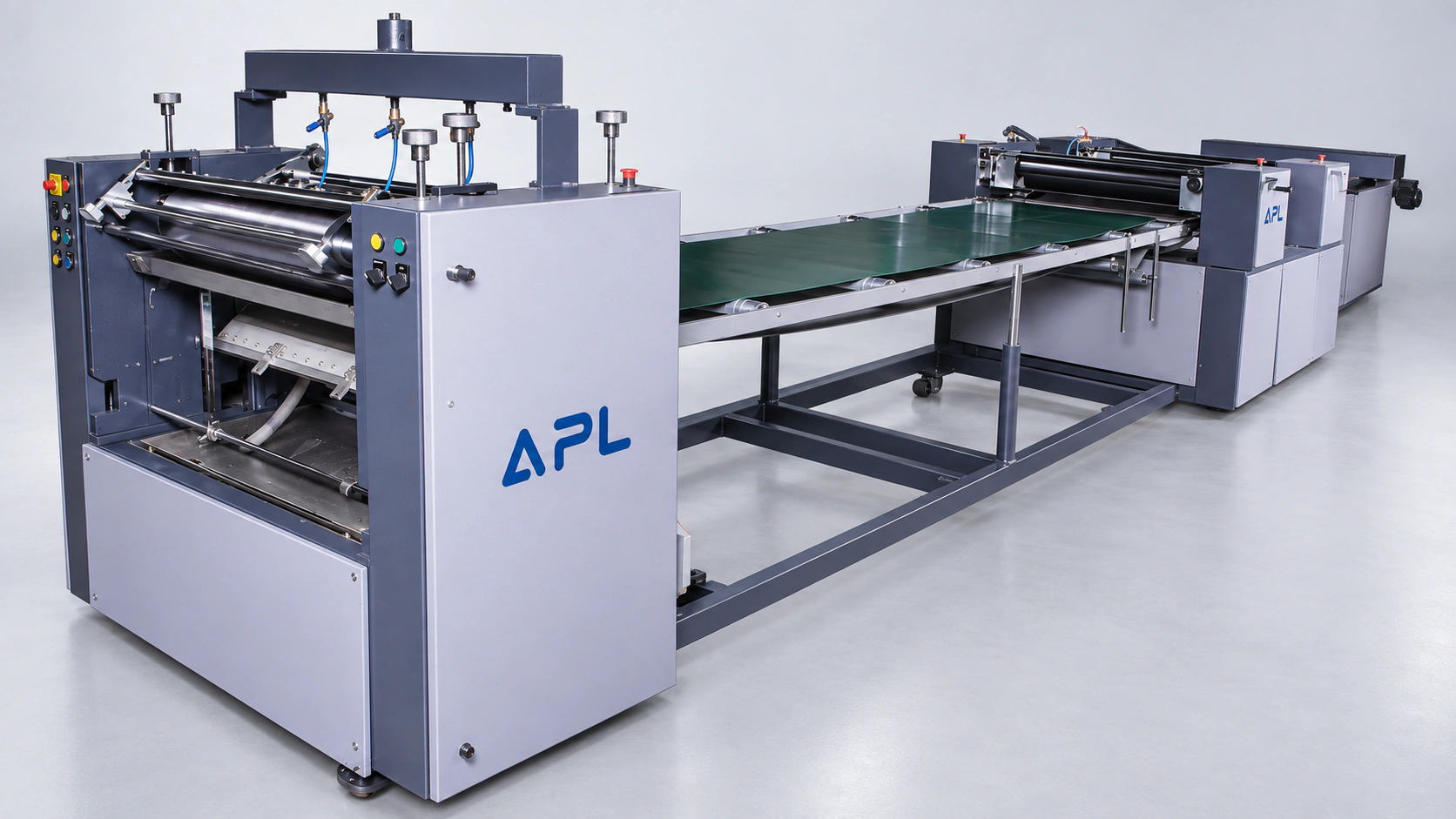
A wood panel finishing line should be planned around the surface you want to sell and the condition of the incoming board. A coated panel, a printed decorative panel and a panel bonded to a facing material create different production requirements. A request for “coating and lamination” needs to be unpacked before equipment is selected.
APL's wood-finishing range covers feeding, preparation, decoration, coating, curing, lamination and stacking. This guide helps you map the route, distinguish the functions and prepare a useful application trial.
Define the finished panel first
Specify the core material, dimensions, thickness range, surface appearance, decoration and intended handling. Attach a sample. Record the essential requirements and the preferences to explore during trials.
Ask these questions before discussing a line:
- Will the surface be coated directly, printed, or bonded to a decorative facing?
- What variation exists in incoming board thickness, flatness and surface condition?
- Will one face or both faces be processed, and what happens to the edges?
- What are the normal batch sizes and changes of design or material?
- Which operations follow finishing, and how will panels be moved and stored?
Use these answers to compare workflows and individual machines. Working width alone cannot establish application suitability.
Choose the route: coating, decorative bonding or protection
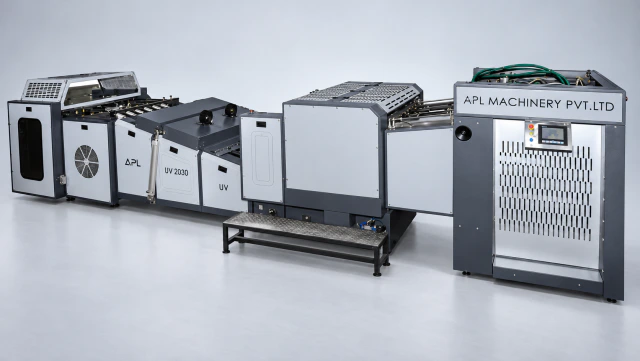
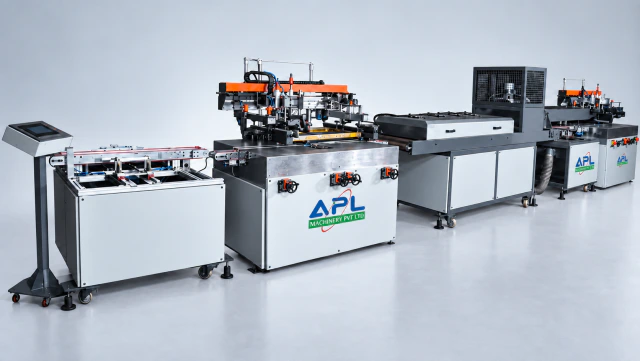
For a coating route, specify the coating formulation and intended layer sequence. Discuss application and curing together. APL's Wood Coating & Curing Line provides a starting point for a connected finishing discussion.
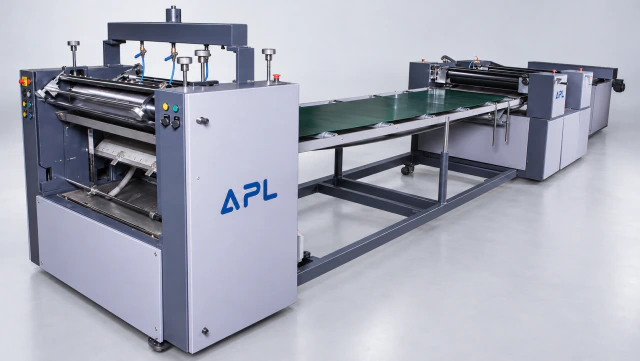
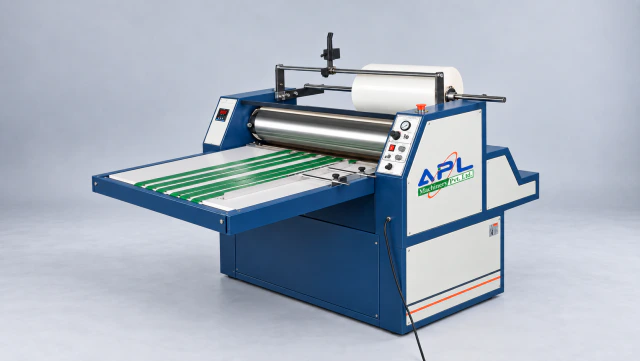
For a bonded decorative surface, the PUR Lamination Machine uses hot-glue PUR adhesive. APL lists facing materials including PVC sheet, acrylic, glass, veneer and paper for discussion with wood board or plywood. The chosen adhesive and actual material combination need application confirmation.
A temporary protective film serves another purpose: protecting an already finished surface during handling, transport or installation. It is different from bonding the decorative facing that forms part of the product. Specify both functions separately when both are required.
Map the handoffs between production stages
Draw the proposed material path from incoming stack to finished stack. Start with preparation and feeding, then mark the required decoration or coating stages, any intermediate treatment, the final finishing step and outfeed. For PUR work, draw the bonding route separately before deciding how shared handling might be arranged.
At every handoff, record panel orientation, transfer height, speed, access and the required surface condition. Include inspection space, operator access and material changes in the layout. Ask which stages can be connected and which need a separate handling step. Do not assume that every machine listed in the range belongs in every line.
Surface preparation deserves its own check. Agree what condition the board must have before coating or bonding and how that will be verified. Include the actual incoming material in trials so preparation needs can be assessed with the finishing process.
Distinguish intermediate cure from final cure
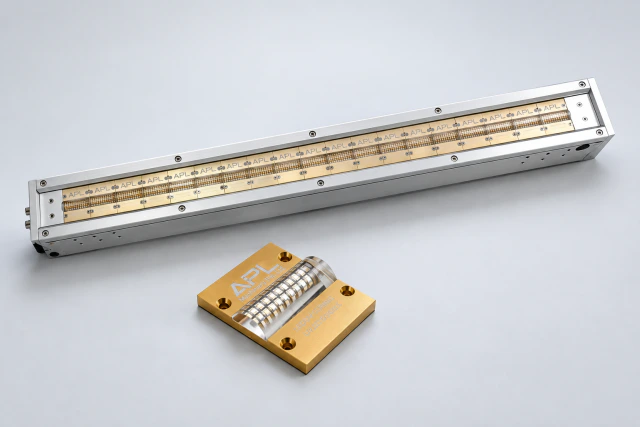
APL describes its single-lamp UV conveyor as a gelling or partial-cure stage between coating operations. That function differs from establishing the required final condition of a finished panel. Define what each curing stage must achieve and confirm the coating compatibility before exposure conditions are set.
A proposed process should identify the coating at each stage, the intended condition before the next layer, and the final acceptance requirement. Ask how APL and the coating supplier will validate those conditions at the required line speed. More lamps or a higher stated output should not replace a formulation-specific trial.
Keep PUR bonding conditions in the adhesive brief
Send the adhesive supplier the core, facing material and proposed process. Request the relevant technical data and confirm application conditions, working time, pressing or contact requirements, handling time and the point at which final bond performance should be assessed.
Do not treat a UV-curing stage as evidence that a PUR bond has reached its required final condition. Follow the selected adhesive's process requirements. The acceptance plan should also identify any surface preparation and downstream handling needed for the actual panel combination.
Use a trial that follows the whole route
- Bring representative incoming boards, facing materials or coatings and a target finish sample.
- Record the process sequence and the conditions used for each trial panel.
- Inspect appearance and consistency across the panel and across the trial batch.
- Agree adhesion, cure or bond checks with the relevant material supplier.
- Assess the intended outfeed, stacking and following operation at the appropriate time.
- Record the cleaning, material-change and inspection steps needed to repeat the result.
Keep accepted and rejected samples with their records. Check whether the proposed output rate includes loading, inspection and batch changes. Plan capacity around accepted finished panels and operator tasks.
Questions buyers often ask
Does every coated panel need PUR lamination?
No. PUR decorative bonding and direct coating serve different product requirements. Select the route from the intended surface and material combination.
Is protective film the same as decorative lamination?
No. APL positions protective film after finishing for handling protection. PUR lamination bonds the selected decorative material to the panel.
Can intermediate gelling be treated as final cure?
Do not assume that. Specify the required condition at each stage and validate the final result with the selected coating system.
Discuss your panel workflow with APL
Review the APL wood-finishing range, then share your wood panel finishing brief. Include the material samples, finished-surface requirement and floor layout so APL can discuss the relevant route and trial scope.
Sources and further reading
- APL: Wood Finishing Range
- APL: Wood Coating & Curing Line
- APL: PUR Lamination Machine
- APL: Single Lamp UV Curing System
- APL: Film Lamination Machine
These sources support the product information in this guide. APL assesses the final application, samples and configuration during a technical discussion.